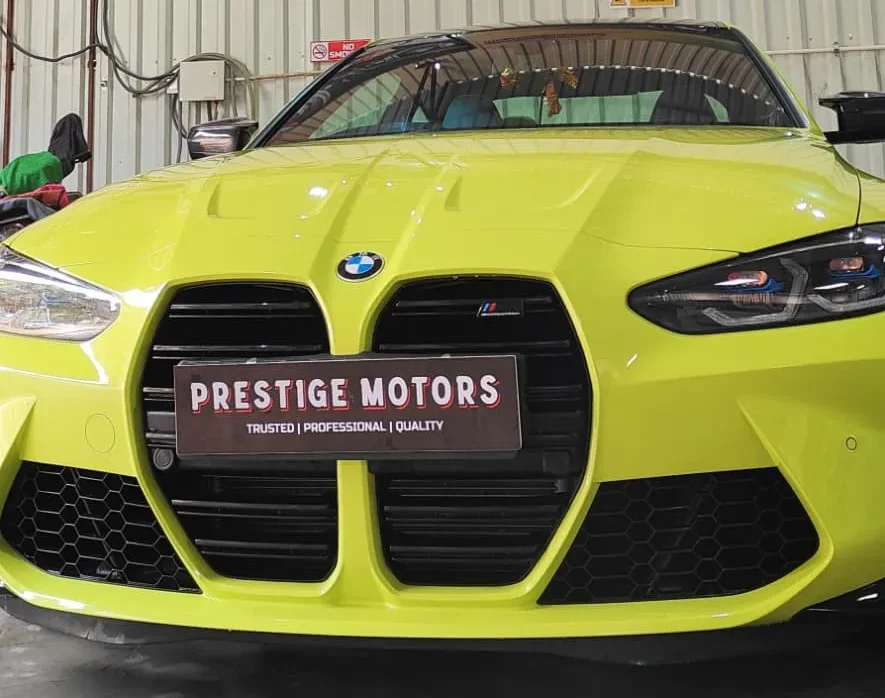
Car owners are constantly investigating how to protect their vehicle’s paintwork from dust, sunshine, water stains, tiny pollutants, and daily environmental exposure. Two options often discussed are Teflon coating and ceramic coating. Both are used on the outside of a car but vary in composition, durability, maintenance needs, appearance, and overall protection.
Understanding how each coating works and what protection it can really provide makes it easier to choose between them. Neither method can make a vehicle 100 percent scratch-proof or stop it from being washed regularly. Instead, coatings provide a protective layer over the original paint and make maintenance simpler.
What Does Teflon Coating Mean?
Teflon coating is a paint protection process that involves applying a thin, smooth layer over the car’s painted surface. It mostly uses polymer-based formulations that provide water-repellent qualities and promote surface smoothness.
The coating may give the outside a glossy look and help reduce the adhesion of dust and certain impurities. This type of coating is the most common choice for car owners who want a relatively easy surface treatment.
Some of the shared features are
- Provides water-repellent qualities.
- Can increase the vehicle’s shine.
- Helps prevent dirt and other pollutants from sticking.
- Usually needs to be reapplied often.
- May be less costly than longer-lasting coating solutions.
Teflon coating does not provide long-term protection against scratches, stone chipping, or significant paint damage. Its main purpose is to enhance and protect the surface, not provide strong physical protection.
Teflon vs. Ceramic Car Coating: Key Differences
The main difference between the two treatments is their composition, bonding qualities, and expected durability. Teflon treatments often have a thinner protective layer, while ceramic coatings are meant to create a longer-lasting, chemically bonded layer.
Numerous factors may explain the similarity:
- Durability: Ceramic coatings tend to be more durable when applied and maintained correctly.
- Gloss: Both may add shine, although ceramic coatings are often preferred for a higher, longer-lasting finish.
- Hydrophobicity: Ceramic coatings provide better, longer-lasting water-repellent performance.
- Maintenance: Both may make cleaning simpler, but ceramic coatings tend to last longer in terms of hydrophobic effects.
- Price. Teflon treatments are usually less expensive up front.
- Application: Professional ceramic coating preparation and application may be more difficult.
- Long-term value: Depends on how long you want to retain the car and how much protection you need.
Longevity & Durability in Teflon vs. Ceramic Car Coating
When comparing these two therapies, durability is one of the most crucial criteria. A coating’s life depends on its composition, preparation, application quality, environmental exposure, and maintenance regimen.
Teflon treatments have a limited useful life and may need to be redone periodically to retain their look and water-repellent properties.
Ceramic coatings are designed for long-lasting performance. When properly applied and cured, they can last a long time, but their effectiveness degrades over time with exposure and care.
A vehicle owner seeking a temporary surface improvement may choose a shorter-duration treatment, while someone wanting longer-term coating performance may consider ceramic protection.
Appearance and Shine on Teflon vs. Ceramic Car Coating
People choose paint treatments for a sparkling exterior. Both options can enhance the look of a well-prepared car.
Teflon coating may improve the surface feel and look, providing a smooth, shiny finish. This is especially evident on clean, well-maintained paint.
Ceramic coating may also improve gloss and paint depth. It creates a lasting layer of protection over the paint, and when the car is cleaned and maintained properly, the finish may still look spectacular.
The final look, however, depends heavily on the quality of the paint before application. A coating will not permanently cover severe scratches, oxidation, or other paint flaws.
Protection against Hydrophobics
Hydrophobic behavior is when water beads and rolls off a treated surface. This is one of the most obvious properties of current ceramic coatings.
Hydrophobic surfaces make water bead up instead of spreading across the paint. This may help reduce the amount of water and dirt left after a storm or wash.
Teflon treatments also may provide water-repellent properties. However, when stronger and longer-lasting hydrophobic behavior is a necessity, ceramic coatings are often used.
If the surface becomes polluted, the efficiency of any treatment may degrade; therefore, frequent maintenance is still required.
Protection Against Pollutants
Cars are constantly exposed to dust, road dirt, bird droppings, insects, tree sap, and other environmental pollutants. Some of these compounds are simpler to remove from a smooth coated surface.
A Teflon coating may provide a smoother surface to help prevent impurities from adhering.
Ceramic coating offers comparable advantages but forms a more lasting protective layer. Its hydrophobic nature also makes it easier to wash every day.
However, neither covering means pollutants can sit on the paint forever without consequence. Bird droppings, tree sap and other caustic materials should be removed as soon as practical.
What to Expect Regarding Scratch Resistance?
This area is where automobile owners often have unreasonable expectations.
Neither Teflon nor ceramic coating will make a car scratch resistant.
Minor surface markings may still appear owing to:
- Improper washing procedures
- Abrasive or dirty cleaning agents
- Road objects (foreign)
- Contact with rough surfaces
- Automatic washing systems
- Wrong drying techniques
Depending on the product and application, ceramic coatings may provide added surface hardness but should not be construed as full physical protection.
A paint protection film is often a more suitable solution for protection against stone chipping, deeper scratches, and other physical impacts.
Which Car Coating Should You Use: Teflon vs. Ceramic?
No single solution fits everyone, and the right option depends on what you value and your budget.
- You want a cheap surface treatment.
- You really want more shine and smoothness.
- Long-term coating performance is not needed.
- You are cool with reapplying periodically.
- Your goal is to make regular cleaning simpler.
Ceramic coating may be right for you if:
- You need longer-lasting surface protection.
- You want excellent hydrophobic performance.
- You want shine that lasts longer.
- You’re willing to put in more upfront.
- You intend to retain the car for many years.
The Bottom Line
A Teflon versus ceramic coating comparison focuses on durability, cost, appearance, hydrophobic performance, and maintenance requirements. A Teflon coating may provide a glossy appearance and basic surface protection at a relatively low initial cost. Ceramic coating often provides longer-lasting performance, better hydrophobic properties, and a more permanent protective layer, but it usually demands a bigger investment and meticulous application.
Before deciding between the two options, consider your vehicle’s age, paint quality, use, parking situation, maintenance practices, and ownership timeline. Above all, remember that neither treatment replaces proper cleaning or full protection against scratches, dents, and stone chips.